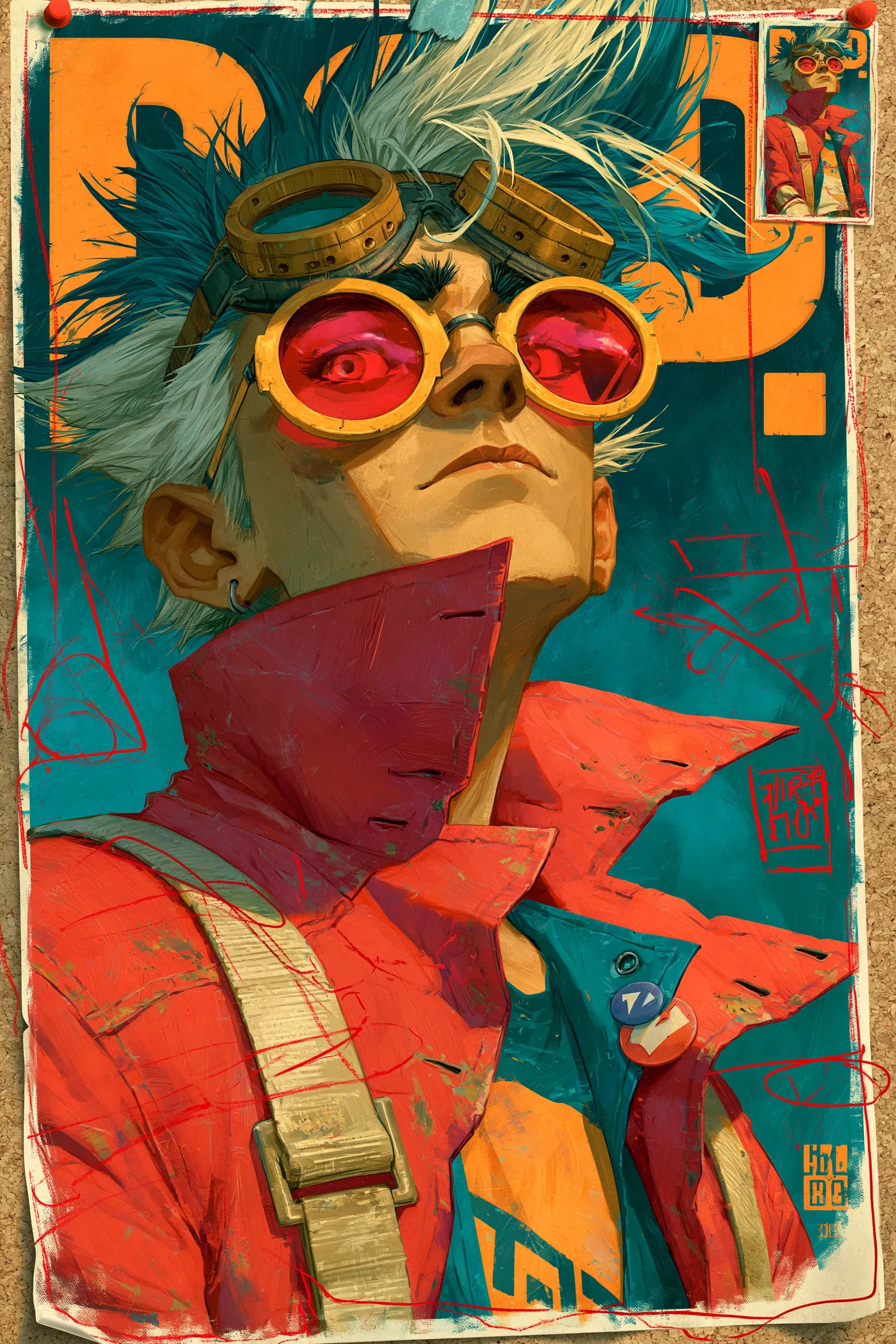
Your cover is the hardest-working page in your comic. It is the only one a reader sees before deciding whether the other pages are worth their time.
On a storefront grid or a social feed, you get roughly three seconds. If the cover does not communicate what this is and why it is interesting in that window, the reader scrolls on. Here is how to win those three seconds.
One Cover, One Focal Point
The single most common cover mistake is trying to show everything. The whole cast, the setting, the villain, the plot — all crammed into one image. The result reads as noise.
Pick one focal point. Usually that is your protagonist, mid-emotion or mid-action. Everything else on the cover should support that focus, not compete with it. A reader's eye needs an obvious place to land, and your job is to choose where.
Pass the Thumbnail Test
Here is a habit that will fix more cover problems than any other: shrink your cover to the size of a postage stamp and look at it.
That tiny version is how most readers first meet your book — in a search grid, a recommendation strip, a phone screen. If the focal point is still clear and the title is still readable at that size, the cover works. If it turns to mud, it does not, no matter how gorgeous the full-resolution file looks.
Treat the Title Like Part of the Art
Your title is not something you slap on at the end. It is a design element from the first sketch.
A few rules that hold up well:
- Readability first: a stylish font that nobody can read is a failed font.
- Contrast against the background: dark title on a dark sky disappears. Add an outline, a glow, or a solid bar behind the text.
- Leave breathing room: the title needs space around it, not letters jammed against the art.
- Match the genre: a horror title and a comedy title should not use the same lettering energy.
This is lettering at the largest possible scale — the same craft you would apply to captions inside the book, covered in Lettering 101.
Signal the Genre Before They Read a Word
A good cover answers "what kind of story is this?" through pure visuals. Readers are pattern-matching constantly, and you want to land in the right pattern.
Deep shadows and a muted palette read as horror or noir. Bright primaries and a dynamic pose read as superhero action. Soft light and warm tones read as slice-of-life or romance. None of this is a rule you must obey — but if you break the expectation, do it on purpose. Your art style choice does a lot of this signaling for you.
Use Color and Contrast as a Spotlight
Color is how you control where the eye goes. The strongest covers keep most of the image in a restrained palette, then place the highest-contrast or most saturated color exactly on the focal point.
A character in a warm orange jacket against a cool blue night will pop instantly. The same character against an equally busy, equally bright background will vanish. Contrast is not about how many colors you use — it is about where you concentrate them.
Build the Cover With Consistency Already Locked
Your cover character has to look like the character inside the book. A reader who picks up the comic expecting the cover hero and finds a slightly different face feels quietly cheated.
This is where consistency tooling matters. With NarrInk, the Character Bible holds your character's appearance steady, so the figure on your cover is the same one readers meet on page one. You can also generate several cover compositions in minutes and compare them honestly instead of marrying the first idea.
Test It Before You Commit
Before you call a cover finished, run it past three quick checks:
- The squint test: blur your eyes. Is the focal point still obvious?
- The thumbnail test: shrink it. Is the title still legible?
- The stranger test: show someone for three seconds and ask what genre they think it is.
The Cover Is a Promise
A great cover does not oversell — it accurately advertises the best version of your story and makes that version look irresistible. Get the focal point, the title, and the contrast right, and you have a cover that earns the click. From there, you are into pricing and selling and marketing your comic — but it all starts with three good seconds.