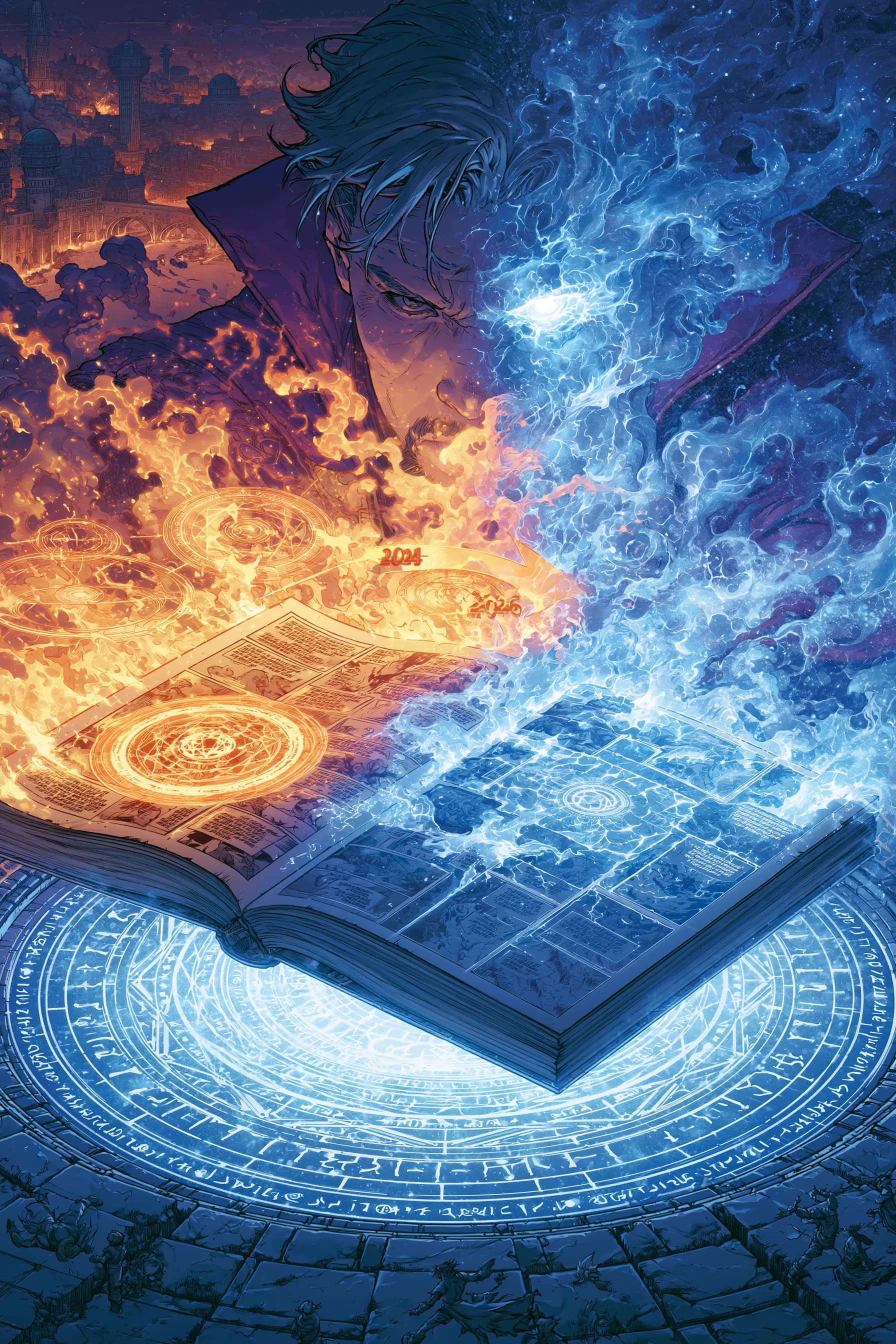
Two years ago, an AI comic meant a folder of mismatched images with characters who changed faces between panels. It was a novelty, not a medium.
In 2026, that has changed. AI comic creation is no longer about whether you can generate a panel — that is solved. It is about whether you can generate a coherent, well-paced, consistent comic that someone actually wants to read. Some of that is now genuinely good. Some of it is still hard. Here is an honest map of where the medium stands.
What Has Matured
Three things crossed the line from frustrating to reliable, and together they are what made AI comics a real format.
Character consistency. The defining failure of early AI comics — characters who looked like different people on every page — is largely solved. Modern tools use a Character Bible that locks appearance, wardrobe, and expressions across every panel. NarrInk does this, and it is the difference between a slideshow and a comic. Readers can finally follow a character through a story.
Narrative pacing. Early tools treated a script as a list of images to render. The better tools in 2026 read the whole story and make editorial decisions — which beat gets a full-page splash, which conversation moves fast, where to let a quiet moment breathe. That is the work of a comic editor, and AI doing it well is a genuine leap. If you want to understand the craft being automated, see what professional comic book editors do.
Style control. You are no longer stuck with whatever look the model defaults to. Style locking and custom presets mean a comic holds one visual identity from cover to last page, and you can build a look that is recognizably yours.
What Is Still Hard
Maturity is uneven. A few things remain genuinely difficult, and pretending otherwise does creators a disservice.
- Subtle acting. Big emotions render well. The small stuff — a barely-there smirk, a flicker of doubt, a glance that means everything — is still where a skilled human artist pulls ahead.
- Complex action staging. A clean two-character beat is reliable. A chaotic six-character splash with clear spatial logic still often needs a human hand to direct.
- True authorship. AI can render your story beautifully. It cannot decide what your story is about, why it matters, or what it is trying to say. That gap is not closing — and it should not.
- Standing out. When anyone can generate a polished comic, polish stops being a differentiator. A good-looking comic with a thin story is now common, and common is the opposite of memorable.
How the Creator Economy Is Shifting
The biggest change in 2026 is not technical. It is who gets to make comics.
For decades, the bottleneck was drawing skill. A novelist with a great story but no art training simply could not make a comic. That gate is gone. The new bottleneck is the one that always mattered most anyway — storytelling. Pacing, character, dialogue, structure.
That has pulled a wave of novelists and hobbyist storytellers into the medium, and it has shifted where creators spend their effort. Less time fighting consistency, more time on the script and the edit. The skills that matter now are writing skills: pacing, dialogue, and structure.
It has also compressed timelines. A comic that generates in minutes means more iteration, more experiments, and faster catalogs — which changes how creators build an audience and a body of work.
AI as a Partner, Not a Replacement
The framing that has settled in 2026 is the healthy one: AI is a production partner, not an author.
Think of it as the difference between a director and a crew. You decide what the story is, what it means, and how it should feel. The AI handles the labor-intensive production — rendering panels, holding consistency, drafting layouts — at a speed no individual could match. The human still owns the part that makes a comic worth reading.
The creators thriving right now are not the ones who type a prompt and publish whatever comes back. They are the ones who treat AI as a fast, tireless studio and bring real editorial judgment to it.
Where the Medium Goes Next
A few honest predictions for the next stretch:
- The bar rises. As consistency and polish become table stakes, story quality becomes the entire game. Good is no longer good enough.
- Hybrid workflows grow. More creators will generate AI drafts and hand-finish key panels — see AI comic generator vs. drawing by hand for how that split works today.
- More volume, more niches. Lower production cost means more comics in more specific genres, and smaller, more devoted reader communities.
- Craft knowledge matters more. Layout, lettering, and pacing become the skills that separate forgettable comics from great ones.
The Bottom Line
AI comics in 2026 are no longer a question of can you. They are a question of should you, and how well. The technical problems are mostly solved; the storytelling problems are exactly as hard as they have always been — which is the most encouraging news possible for anyone with a real story to tell.
Ready to start? Learn how to turn a novel into a comic book, sharpen your craft with our guide to pacing a comic, and weigh your tools with the AI comic generators buyer's guide.